Best Date Night Restaurants: What 50,000 Reviews Actually Say
We analyzed 50,000 reviews to find what actually makes a restaurant great for date night. The answers go far beyond food quality.
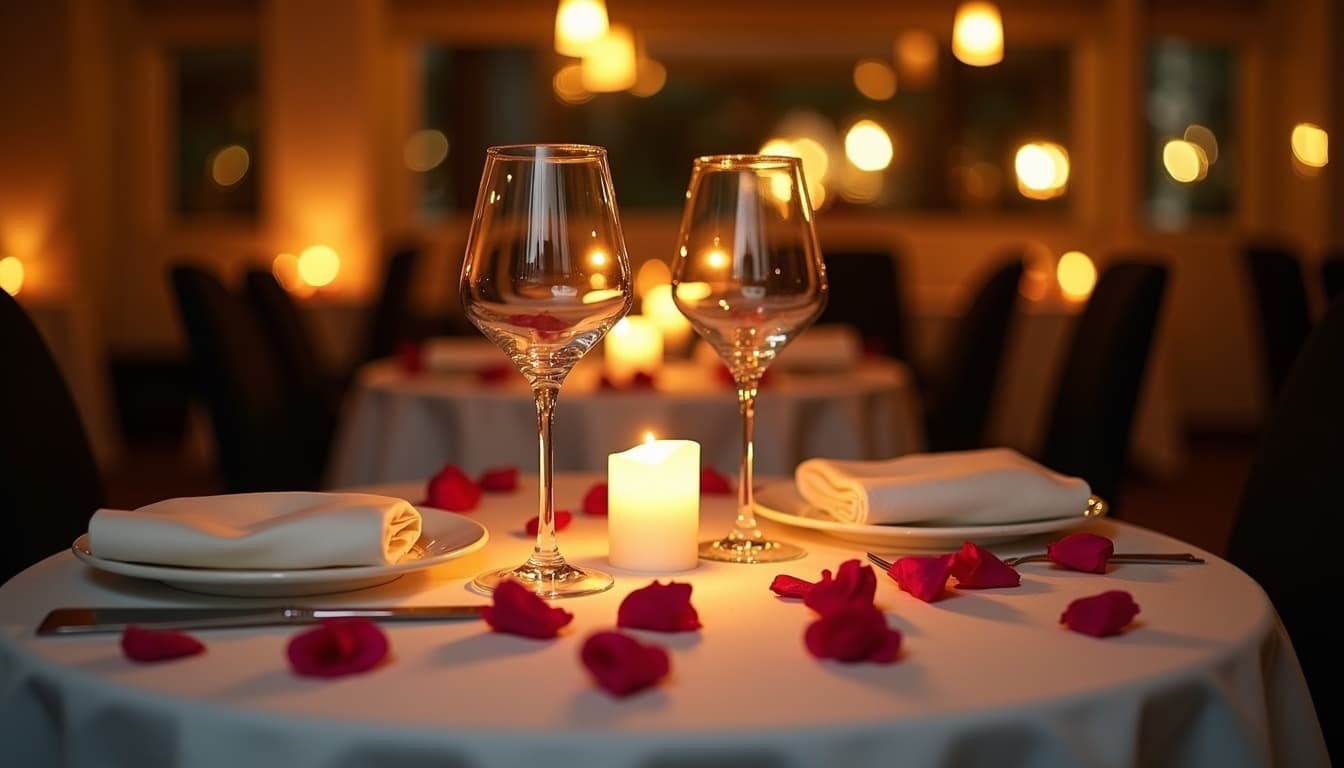
Nobody writes a detailed review after an average date night. They write them after the great ones and the disasters. That asymmetry makes date night reviews some of the most revealing data in our entire dataset.
We pulled 50,000 reviews across Google, Yelp, TripAdvisor, OpenTable, and Reddit where reviewers explicitly mentioned a date, anniversary, or romantic occasion. Then we ran sentiment analysis to figure out what actually separates a memorable date night restaurant from one that just has good food.
The results surprised us. Food quality barely cracks the top five factors.
The Six Qualities That Define a Great Date Night Restaurant
When reviewers describe a date night they loved, they consistently mention the same attributes -- and they mention them in roughly the same order of emphasis. Here's how the data breaks down:
| Factor | % of Positive Date Night Reviews Mentioning It | Typical Phrasing |
|---|---|---|
| Ambiance and lighting | 78% | "dim lighting," "candles on every table," "warm glow" |
| Noise level | 64% | "could actually hear each other," "not too loud" |
| Service pacing | 58% | "never felt rushed," "attentive but not hovering" |
| Food quality | 52% | "every dish was incredible," "best pasta I've had" |
| Table spacing | 41% | "felt private," "not crammed in," "intimate seating" |
| Menu variety and shareability | 34% | "great for sharing," "interesting small plates" |
That ambiance outranks food quality by 26 percentage points is the single most important finding in this analysis. You can have a spectacular meal and a mediocre date if the restaurant feels like a cafeteria. Reviewers understand this intuitively, even when they struggle to articulate it.
What "Romantic" Actually Means in Review Data
The word "romantic" appears in about 12,000 of our 50,000-review sample. But it's a frustratingly vague term. People use it to describe everything from a candlelit French bistro to a rooftop taco spot at sunset.
When we decompose what reviewers are actually describing when they say "romantic," three clusters emerge:
Sensory intimacy. Low lighting, warm color temperatures, soft background music, and the absence of harsh fluorescents or blaring TVs. This is the most common cluster by far. Reviewers aren't asking for rose petals. They're asking for an environment that feels different from their Tuesday night takeout.
Personal attention. The server remembers your name, paces courses around your conversation rather than the kitchen's convenience, and doesn't interrupt at awkward moments. Several reviewers mentioned the specific detail of a server noticing they were celebrating and comping a dessert or bringing a candle without being asked.
Physical privacy. Enough space between tables that your conversation doesn't become the next table's entertainment. Booth seating, corners, and patios with separated areas score highest. Communal tables score lowest, even at restaurants that are otherwise excellent.
None of these require white tablecloths or a prix fixe menu. Some of the best-reviewed date night spots in our data are mid-range restaurants that simply nail these three qualities.
The Cuisines That Dominate Date Night Reviews
Not all cuisines are created equal when it comes to date night. Based on frequency in positive date-night-tagged reviews, these categories punch above their weight:
Italian. No surprise here. Italian restaurants appear in positive date night reviews at roughly 3x their share of total restaurant reviews. The reasons are structural: Italian menus are inherently shareable (antipasti, pasta courses, shared desserts), the cuisine has cultural associations with romance, and the restaurants themselves tend to prioritize ambiance. Check out our best Italian restaurant rankings for specifics in your area.
Japanese (omakase and izakaya). The omakase format -- where the chef selects courses for you -- eliminates the anxiety of menu decisions and creates a shared experience. Izakayas, with their small-plate format and moody interiors, accomplish something similar at a lower price point. Both formats appear disproportionately in date night reviews.
French bistro. Not fine dining French, specifically. The bistro subcategory -- intimate rooms, handwritten menus, prix fixe options -- shows up frequently. Reviewers associate the format with a sense of occasion without the stiffness of a Michelin-starred tasting menu.
Rooftop and terrace dining. This cuts across cuisines. Any restaurant with an outdoor component -- especially one with a view -- gets a date night boost in reviews. Sunset timing is mentioned in roughly 30% of these reviews, suggesting that strategic reservation timing matters as much as the restaurant itself.
Speakeasy-style and hidden spots. Restaurants that require some knowledge to find -- an unmarked door, a reservation-only policy, a location inside another business -- generate outsized enthusiasm in date night reviews. The discovery element becomes part of the date itself.
Common Date Night Mistakes (According to Reviewers)
Negative date night reviews are even more instructive than positive ones. Here's what goes wrong:
Choosing on food reputation alone. The most common pattern in negative date night reviews: a restaurant with great food but terrible atmosphere for a date. High-energy spots with communal seating, loud music, and a "scene" vibe are frequent offenders. The food lives up to the hype. The date doesn't.
Ignoring noise level. This is the number-one complaint in negative date night reviews, appearing in 71% of them. Reviewers describe having to shout across the table, give up on conversation entirely, or leave early. A restaurant can be outstanding by every other metric and still fail as a date night spot if you can't talk.
Skipping the reservation. Date night reviews that mention waiting for a table are overwhelmingly negative, regardless of how good the meal was. The wait introduces stress and eats into the evening. OpenTable reviews are particularly blunt about this -- diners who booked in advance rate their experiences 0.4 stars higher on average than walk-ins at the same restaurant.
Underestimating pacing. Reviews frequently mention feeling rushed -- courses arriving before the previous plate is cleared, checks dropped before coffee is offered. Conversely, some reviewers describe waits of 30+ minutes between courses. Both extremes tank the experience. The best-reviewed date night restaurants consistently get pacing right, and reviewers notice.
Going too formal. A surprising finding: overly formal restaurants generate mixed date night reviews. Phrases like "stuffy," "pretentious," and "couldn't relax" appear frequently. First dates especially suffer in high-formality environments. Reviewers who loved these restaurants often specify they went for an anniversary, not a first or early date -- suggesting there's a formality-comfort mismatch that depends on relationship stage.
A Framework for Choosing Your Date Night Spot
Based on everything the review data tells us, here's a practical checklist for evaluating any restaurant as a date night candidate. This is the same kind of multi-signal analysis we use for our best-of rankings, simplified for personal use.
Step 1: Check the ambiance signal. Search for the restaurant on Google or Yelp and scan photos. Look for dim lighting, warm tones, candles. Read 3-5 reviews and see if anyone mentions atmosphere. If the photos look fluorescent and nobody mentions ambiance, move on.
Step 2: Read the noise reviews. This is the single highest-leverage filter. On Yelp, filter by "1 star" or "2 star" and search for "loud" or "noise." If multiple reviewers across different platforms complain about noise, believe them. Noise issues are almost never fixed.
Step 3: Check table configuration. Look at Google Maps photos and any reviewer-uploaded images of the dining room. Count the space between tables. If tables are practically touching, you'll feel it.
Step 4: Evaluate the menu for shareability. Small plates, tasting menus, and family-style options all create interaction points during the meal. A menu where you each order one entree and eat in parallel is fine, but it's a missed opportunity.
Step 5: Look at OpenTable pacing feedback. If the restaurant is on OpenTable, filter for "pace" or "rushed" in reviews. OpenTable diners tend to be more specific about service timing than reviewers on other platforms.
Step 6: Book early. Not just "make a reservation." Book 5-7 days in advance and request a specific table type (booth, corner, patio) in the notes. Several reviewers attribute their positive experience to getting the right table, and restaurants are surprisingly responsive to these requests when given lead time.
What the Data Can't Tell You
Reviews are powerful, but they have limits. They can tell you whether a restaurant is generally good for dates, but they can't account for your specific preferences, your partner's dietary restrictions, or the fact that you had a terrible experience at a French bistro once and now associate bouillabaisse with heartbreak.
This is where AI-powered review analysis helps. Instead of reading 200 reviews yourself, you can search for exactly what you need -- "quiet Italian restaurant with a patio that's good for a first date" -- and get an answer grounded in what real reviewers have said across every major platform. That's the whole point of what we built.
Find Your Spot
We've done the analysis at scale so you don't have to do it review by review. Search for best date night restaurants near you and get recommendations backed by real reviews from 100+ sources -- with the ambiance, noise, and service signals that actually matter for a great evening.